In recent years there have been a staggering increase in banned books in the United States. According to a Harvard educational magazine, there had been 1,269 efforts to censor books and resources nationwide just in 2023, almost twice as many in 2021. Many parents and politicians alike claim they want to protect the children, but it actually harms children rather than protecting them.
The biggest issue comes from the topics and themes that an abundance of books have that are supposedly too inappropriate for students. Many teachers and librarians have noticed that the majority of books being banned in schools feature LGBTQ+ themes, race, American history, and gender.
Even worse, teachers and librarians are getting in trouble and even fired for providing these books to students. “We’re seeing librarians and library workers coming under attack for providing for the information needs of their communities in a way that serves the information needs of marginalized communities, being attacked for having books on the shelves that reflect the lives and experiences of LGBTQ+ persons, people of color, Black Americans, and Indigenous persons,” notes Deborah Caldwell-Stone, director of the ALA’s (American Library Association) Office of Intellectual Freedom. She continues, “We’ve even had a number of communities where organizations have demanded that librarians be charged with obscenity or other crimes for having books on the shelves on themes of sex education or sexuality or that address LGBTQ+ themes.”
In one case, in 2022, a fifth-grade teacher in Georgia was fired for reading “My Shadow is Purple”- a children’s book about gender fluidity- to her students. It was also stated that the students chose the book for the teacher to read, not the teacher herself.
According to Liz Phipps-Soerio, a middle school teacher and director of library services for Boston public schools, she noticed that it only takes one complaint for a book to be removed. “A lot of these books are being banned by one complaint, and you don’t even have to read the books,” she notes.
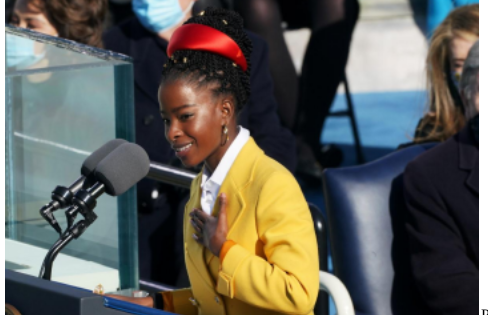
The poem “The Hill We Climb,” written by Amanda Gorman in 2021, was removed from an elementary school and moved to a middle school in Florida because one parent claimed it was “inapropriate” for elementary school students and more suited for middle school. A PBS article discussing the situation highlights Gorman’s Facebook post, “I’m gutted, robbing children of the chance to find their voices in literature is a violation of their right to free thought and free speech.” The nature of Gorman’s poem was to inspire and give hope to people, especially towards younger audiences, who have sent Gorman letters and videos telling her how inspired they felt by her poem.
Gorman has also stated that banning books in general limits American freedom, “Banning books is censorship, period. It limits American freedom — Americans’ freedom — and we should all stand against that type of act.”
In a Harvard educational magazine, they also bring up similar sentiments Gorman expressed, “Reading is essential to learning,” says Elaine McArdle, the writer of the magazine. “Books help children understand the world around them in all its complexity, and they deserve to see themselves reflected in the books available to them. And parents should make decisions for their own children but not for other people’s kids.”
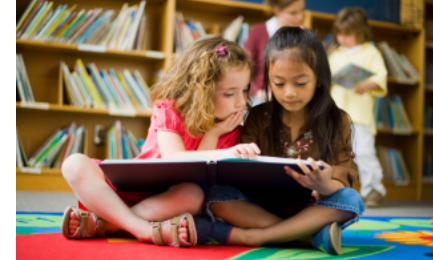
An article from Columbia University interviewed their teacher college (TC) experts on their thoughts on the book ban sweeping our nation.
One TC expert, Alex Eble, views this ban as limiting representation and how students view and treat their peers as well as themselves. “What people see affects who they become, what they believe about themselves and also what they believe about others…Not having equitable representation robs people of seeing the full wealth of the future that we all can inhabit.”
Soyna Douglass, another TC expresses a similar sentiment as Eble but further explains how limiting it is for student learning. “[Book bans] diminish the quality of education students have access to and restrict their exposure to important perspectives that form the fabric of a culturally pluralist society like the United States. It’s a battle over the soul of the country in many ways; it’s about what we teach young people about our country, what we determine to be the truth, and what we believe should be included in the curriculum they’re receiving. There’s a lot at stake there.”
As states continue to ban books in their schools, it makes one wonder just what is allowed for children to read?
Sources:
Book Bans and the Librarians Who Won’t Be Hushed
Harvard Graduate School of Education Amanda Gorman’s inauguration poem banned by Florida school
PBS News What You Need to Know About the Book Bans Sweeping the U.S.