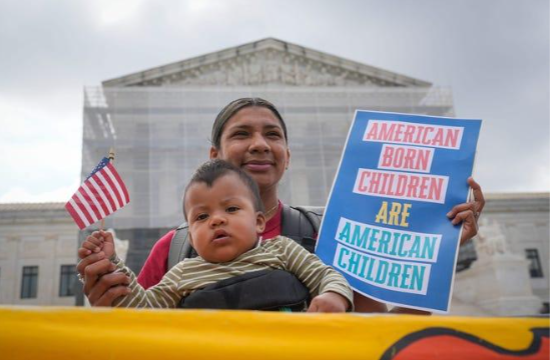
On December 5th, 2025 the Supreme Court agreed to take on a case that could uproot an over century long constitutional amendment. Birthright Citizenship was granted in the 14th Amendment on July 9th, 1868. Passed after the civil war, it was primarily meant to grant formerly enslaved people citizenship. The 14th Amendment states, “All persons born or naturalized in the United States, and subject to the jurisdiction thereof, are citizens of the United States and of the state wherein they reside.” Trump now seeks to change that.
Trump’s administration claims that citizenship has been too flippantly given to children of non-citizens. On his first day after being sworn in, Trump passed an executive order entitled, “Protecting the Meaning and Value of American Citizenship” to withhold citizenship from children born “from a mother who was unlawfully present in the United States and the father was not a U.S. citizen or lawful permanent resident (LPR) at the time of said person’s birth, or when that person’s mother’s presence in the United States at the time of said person’s birth was lawful but temporary (such as, but not limited to, visiting the United States under the auspices of the Visa Waiver Program or visiting on a student, work, or tourist visa) and the father was not a U.S. citizen or LPR at the time of said person’s birth.” However, this would only apply to children born 30 days after the order was signed. This was a part of the Trump administration “larger crackdown on the nation” immigration system, to combat what they have deemed “significant threats to national security and public safety.”
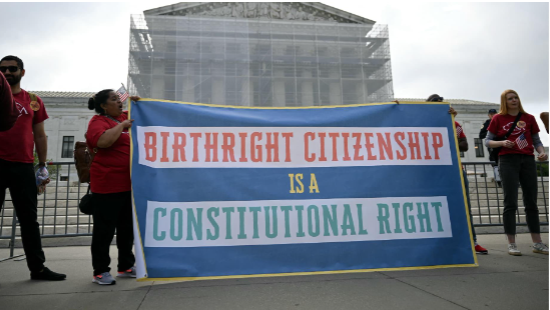
Lawyers for the Trump administration say parents in the country temporarily are not subject to the jurisdiction of the U.S. Several lawsuits were launched, and four federal courts and two appeals courts have blocked implementation of the executive order on the ground that it violated the constitution. In one of those cases, the Supreme Court handed down an important ruling limiting the ability of lower courts to give universal injunctions. Yet it did not rule on the constitutionality of Trump’s, executive order. Despite the administration, repeated losses in lower courts on this issue and despite the governing case of United States v. Wong Kim Ark, which affirmed the American citizenship of a man born to Chinese citizens in San Francisco, the Supreme Court will now hear the administration’s arguments this spring. If Trump’s order is allowed to take place, we think about the future of America, which is a country famous for its diversity and a country built upon the work and blood of immigrants. One is left to wonder, is America “great again” yet?
Sources:
Npr
BBC
CBS
CNBC
AILA
Congress.gov