
The European Union Court ruled that Hungarian LGBTQ+ laws prohibiting or restricting access to LGBTQ content, which stigmatise and marginalise gay and trans people introduced in 2021, violated EU laws and values on multiple levels. The European court said Hungary had acted in breach of Article 2 of the EU’s Treaty, which sets out the fundamental values of the 27-member bloc.
Several of the amendments of the Hungary law, the CJEU said, “constitute a coordinated series of discriminatory measures” against “the rights of non-cisgender persons, including transgender persons, or nonheterosexual persons,” the judges argued. The problematic parts are also against respect for human dignity, equality, and human rights, “including the rights of persons belonging to minorities,” according to the decision.
These laws the Hungarian legislation implemented mean that gay and transgender people or themes cannot feature in school educational material or in any TV show, film, or advert shown before 10 pm. The law resulted in the banning of books, plays, and films for “promotion of homosexuality” to under 18. Critics compared it to Russia’s harsh gay propaganda law of 2013 and called it out for stigmatizing LGBTQ+ people and equating same-sex relationships to pedophilia.
Nationalist Prime Minister Viktor Orban, who has been in power since 2010 and lost recent elections held on April 12th, insisted as he introduced the legislation five years ago that it was aimed at toughening punishments for child abuse. However, Orban’s regime continued to press the issue. Last year, it introduced new laws and a constitutional amendment that effectively banned the Budapest Pride march by declaring a determination to protect children from “sexual propaganda,” going as far as to allow police to use facial recognition cameras to identify who attended.
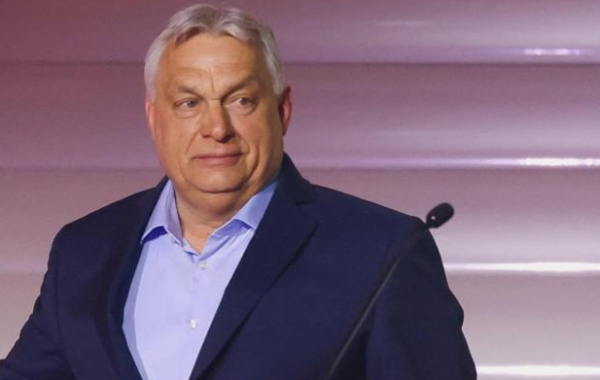
Incoming leader Peter Magyar, who won a landslide election victory over Orban after promising to root out corruption and improve living standards, has pledged to reset Hungary’s ties with the EU and vowed to “bring home” EU funds intended to help Hungary develop its economy, some of which were frozen (some 18 billion euros – $21bn) over the anti-LGBTQ+ law.
Although also a conservative, Magyar avoided taking a clear stance on LGBTQ rights during election campaigning. Yet in his victory speech, he said Hungary has decided it wants to be a country where “no one is stigmatized for loving differently or in a different way than the majority.”
Sources:
Bohumil Petrík. “European Union Court Rules Hungary’s LGBTQ Law “Breaches EU Founding Values.”” Catholic News Agency, 23 Apr. 2026, www.ewtnnews.com/world/europe/european-union-court-rules-hungary-s-lgbtq-law-breaches-eu-founding-values.
Hallam, Mark. “Hungary: Orban-Era LGBTQ Rules Breach EU Laws, ECJ Finds.” Dw.com, Deutsche Welle, 21 Apr. 2026, www.dw.com/en/hungary-orban-era-lgbtq-law-infringes-human-rights-ecj-rules/a-76876926. Accessed 2 May 2026.
Jazeera, Al. “EU Court Rules Hungary’s LGBTQ Law Violates Human Rights.” Al Jazeera, 21 Apr. 2026, www.aljazeera.com/news/2026/4/21/eu-court-rules-hungarys-lgbtq-law-violates-human-rights.
Rankin, Jennifer. “EU’s Top Court Finds Hungary’s Anti-LGBTQ+ Law in Breach of Key Values.” The Guardian, The Guardian, 21 Apr. 2026, www.theguardian.com/world/2026/apr/21/eu-court-ecj-hungary-anti-gay-lgbtq-law.
Reuters Staff. “EU Court Says Hungary’s Anti-LGBTQ Rules Breach Law.” Reuters, 21 Apr. 2026, www.reuters.com/world/eu-court-says-hungarys-anti-lgbtq-rules-breach-law-2026-04-21/.