




I am an Ambassador for UW Making Connections and the Founder of the Renton Student Union, committed to ensuring that Gen Z stays informed about the issues that matter most and understands the forces shaping our communities and future.
Renton’s history highlights political change that often goes unnoticed once it becomes normalized. Our current minimum wage was the result of hard work through deliberate organizing and collective action by everyday people.
What is Renton Raise The Wage?
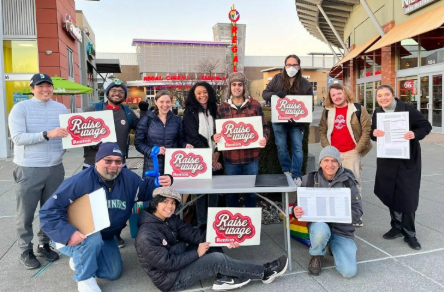
The city’s $21.57 minimum wage did not come out of nowhere, nor did it come easily. It was the result of sustained, unpaid organizing by working class people in 2023. People of Renton felt that the standards of living weren’t fair, so they mobilized. Today our minimum wage would need to constantly adjust to be livable; according to the City of Renton’s Labor Standard “Renton Municipal Code 5.28 requires the minimum wage rates to be adjusted annually based on the Seattle-Tacoma-Bellevue area’s inflation.”
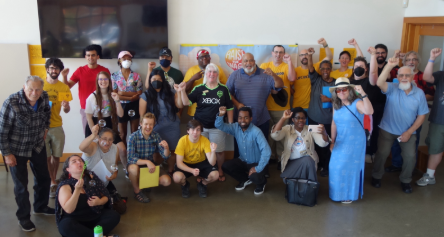
The organizing efforts to increase the minimum wage was mainly led by the Chair of Renton Raise the Wage campaign Guillermo Zazueta, Steering Committee Member Maria Abando and others, Union leaders like Michael Westgard, Seattle branch of Democratic Socialist of America and Transit Rider Union. Endorsers included Carmen Rivera and Sen. Bob Hasegawa. The campaign was sustained by volunteers of working-class people and a coalition of many working-class organizations. This included organizations like Renton education association, SEIU and MLK Labor council which represents over 150 unions in King County.
The context for why thousands of people were pushed to take part in the mobilization effort is that after the pandemic, housing prices increased by nearly 50 percent and rents continued to rise, while wages remained stagnant at a minimum wage of $16.28. According to Zazueta and Abando, with 2023 pay rates a person working full time at minimum wage would need to work approximately 77 hours a week to afford a one-bedroom apartment. This reflects the lived reality of many residents. Zazueta and Abando also mentioned that 44 percent of Renton households are considered low-income and people of color have been disproportionately affected, with 57 percent of Black households and 63 percent of Hispanic households qualifying as low-income.
The campaign in Renton was inspired by Tukwila’s success in raising their minimum wage which was led by the Transit Riders Union and Katie Wilson. Transit Rider Union played a big factor in the success of Renton’s organizing efforts as they guided them through the process.
https://transitriders.org/its-time-to-raise-tukwilas-minimum-wage/
How Organizers Did It
The process to establish this new minimum wage policy in Renton required the campaign organizers to make a comprehensive draft of the initiative and collect 8,913 signatures so the initiative could have a chance to be adopted immediately through an ordinance or be put on a special local election ballot for Renton citizens to vote on. Over the course of 2023, organizers gathered 16,783 signatures and turned it in at the King County Election Office to be validated. 9,652 were valid with the requirement of 8,913.
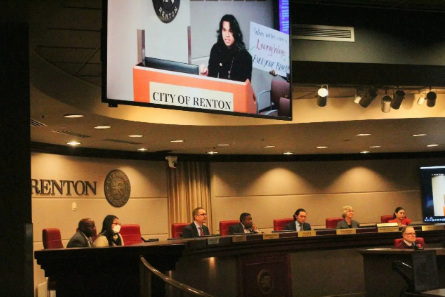
Once they had enough valid signatures, Renton city council passed the resolution no.4516, requesting King County elections to place initiative measure 23-02 (the initiative organizers drafted) on the special election ballot.
Before the decision to put it on the ballot for people to decide, people pleaded to put it as law immediately. Organizers fought hard through testimonies at the Renton City Council’s December 4 public hearing, urging the Council to adopt the initiative as an ordinance. Doing so would have allowed the initiative to be implemented immediately without elections.
On the opposing side, small businesses also testified to share their concerns, arguing that if large employers are required to implement a higher hourly wage, workers may prefer to work for larger employers, which could drive employees away from local businesses. They explained that small businesses would then be forced to compete by raising wages as well.
Other opposing testifiers also raised concerns about the possibility of increased taxes. They argued that implementing the policy would require an entire enforcement team to ensure employers are actually complying with the new law. It would require funding through taxpayer money. Both conspicuous sides led the decision makers to put it on a ballot.
Elections
After ensuring the initiative goes on the special election ballot, the city council appointed people into committees made up of regular citizens, stakeholders, advocates, etc. The committees were created to draft pro and con statements that would be included in the voter pamphlet to help guide voters.
The job isn’t over for community advocates. Organizers and volunteers have to run the campaign to bring awareness to active voters and get them to vote yes once they see the ballot. They also had to bring in people who normally don’t participate in local elections or civic life. Efforts to get people’s attention included the community organizers and volunteers knocking on 25,000+ doors, canvassing to 59,000+ voters, making 14,000+ phone calls and conversing with 15,000+ Renton voters.
Unpaid Volunteer vs Funding
While community members worked hard to organize, a political action committee called “No on 23-02” was created. They raised money to oppose the raise the minimum wage initiative. The funding came from a mix of sources, including large and small businesses, individual donors who personally oppose the measure, nonprofit organizations and trade associations. A public list of contributors shows donations reaching as high as $43,000 from one contributor. Example of contributors is the Washington Hospitality Association, a statewide trade association representing the hospitality industry. Its membership includes a mix of small local businesses and franchise employers from large corporate employers such as McDonalds. Another contributor is the Washington Retail Association, which represents a broad range of businesses, including global retail brands, regional chains, independent stores, wholesalers, and service providers.
Overall, this shows that Renton has a history of civic mobilization, particularly around local economic policy, and that these efforts weren’t easy and linear. These efforts continue to play a role in shaping outcomes residents now experience.
References:
https://seattledsa.org/2024/02/renton-raises-the-wage-workers-win-20-29-hour-starting-in-july-2024/
https://www.officialhacksandwonks.com/raise-the-wage-renton-maria-abando-carmen-rivera/
https://www.rentonreporter.com/news/renton-voters-face-big-decision-on-minimum-wage/
https://info.kingcounty.gov/kcelections/Vote/contests/ballotmeasures.aspx?cid=101112
https://www.rentonwa.gov/City-Services/Tax-and-Licensing/Labor-Standards
https://www.rentonreporter.com/news/rentons-new-minimum-wage-goes-into-effect-july-1/
https://www.codepublishing.com/WA/Renton/html/Renton05/Renton0528.html?utm_source=chatgpt.com
https://www.rentonwa.gov/City-Services/Tax-and-Licensing/Labor-Standards
https://transitriders.org/its-time-to-raise-tukwilas-minimum-wage/
https://www.rentonreporter.com/news/city-calls-for-volunteer-input-on-minimum-wage-increase/ https://nlihc.org/oor/state/wa