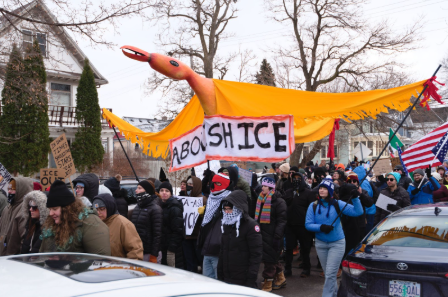
In Minneapolis, a major federal immigration enforcement initiative has faced increasing criticism from tribal leaders, civil rights activists, and legislators. They are upset because Native American citizens have been stopped, questioned, and sometimes detained by the U.S. Immigration and Customs Enforcement (ICE). As this has happened, ICE agents insist that these U.S. citizens are actually undocumented immigrants. Since the shooting of a U.S. citizen by an ICE agent, which has led up to this, the outrage has only grown.
In these last few weeks, some enrolled members of the Oglala Sioux Nation and at least one descendant of the Red Lake Nation have been stopped, detained, or interrogated. ICE says these were raids and identity checks across the Twin Cities metro area, but Native leaders of Minnesota have said this is racial profiling and a fundamental ignorance about both the reality and perception of Native citizenship. While four homeless people of the Oglala Sioux Tribe were taken into federal custody in Minneapolis, a large indigenous community near Little Earth, only one has been released. Three of those detained were “taken to a place of deep historical trauma for Native people,” according to Ho-Chunk Nation attorney Kerri Colich. Fort Snelling, which still holds military apparatus, was where a concentration camp was set up for Dakota people following the U.S. – Dakota War of 1862.
The president of the Oglala Sioux Tribe, Frank Star Comes Out, has urged that the tribal citizens are not aliens and must not be construed as such. “Our people are citizens,” he adds, “of the United States and of our respective tribal nations.” Tribes, for obvious reasons, are sensitive to overtures such as this and the implications that attendance is being made for the construct of any such application to these denoted tribal citizens as perhaps holding any suspect variance to the class of a citizen. Lawmakers in the state, especially those from the Native American Caucus, have condemned what they see as the unlawful stopping and detention of Indigenous people. They say the actions, led by ICE, are rooted in systemic racism. “They’re basically questioning the legality of our existence here,” said state representative, Jamie Becker-Finn, who is Native American, in an interview, “There’s no more basic violation of civil rights than what is happening right now.” The surge in federal enforcement has prompted a reaction from civil liberties groups, which have filed lawsuits alleging that law enforcement is engaging in racial profiling and detaining people unlawfully. The lawsuits point to particular groups of people they say are being unfairly targeted: African, Somali, Latino, and Indigenous communities. The federal government has taken notice, and so have members of Congress, as well as at least one judge, who have made strong statements in the cases.
Although Minneapolis has become the focal point of ICE’s intensified presence, the advocacy among tribes, many of which are located in the Midwest and Great Plains, has pointed to events occurring across the country in Miami, Chicago, and other urban centers. In Washington State, where several tribal nations assert their sovereignty and uphold traditions of citizenship, the events in Minneapolis find a particularly loud echo. Like their counterparts in the Midwest, Native American communities in Washington have in recent years shared similar stories about the intrusions of ICE agents into their spaces and how ICE has a terrifying power over their lives. Leaders among Native American tribes in Washington State, where 29 federally recognized tribes maintain sovereignty, point to what happened in the Minneapolis area as a glaring example. Tribes in Washington maintain that they have been long misidentified by federal authorities, something that when it happens can lead to individual rights being violated in ways reminiscent of what’s happening in the Midwest.
When federal enforcers mistakenly treat Washington tribes as undocumented immigrants, that violates the very sovereignty that those same tribes have fought to uphold for centuries. In Washington, tribal leaders have always fiercely protected against overreach by federal agencies, which seems to be at the core of what happened in Minnesota. Markedly, a group of Native American tribes in Minnesota has pointed to the actions of ICE as a blatant overreach of authority. Native American leaders say that the friction between federal enforcers and Indigenous peoples brings forth a long-standing and painful history.
Sources:
https://www.washingtonpost.com/politics/2026/01/15/native-americans-ice-minneapolis/
https://www.theguardian.com/us-news/2026/jan/15/aclu-lawsuit-ice-minnesota-trump
https://mn.gov/governor/newsroom/press-releases/%3Fid%3D1055-715940?
https://www.wdbo.com/news/national/oglala-sioux-tribe/HBFXZMNMXAYD5A5NLRVWLFE2ZY/