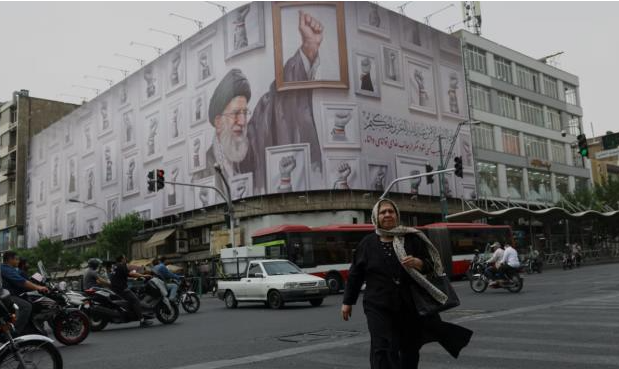
The U.S. Israel military actions against Iran, commencing in 2026, have profoundly altered the global oil market and energy policy. The Strait of Hormuz, a key maritime chokepoint where some 27% of the world’s liquefied natural gas and about 21% of the global crude oil pass, has become the focal point of this systemic risk. Iran’s effective blockade of this route represents the most recent and perhaps most significant supply shock to the oil market in decades. Calculating the effect of this blockade on oil prices requires not only knowing that oil is fungible and pipelines can’t substitute for the shortfall but also estimating how long the Strait might be closed. The massive cratering of oil supplies has pushed “Brent” crude prices well beyond $120 per barrel, and most forecasts predict that prices will stay high as long as the war lasts. This kind of price volatility is not new, but it does underscore the vulnerabilities of the “long peace” that had kept the Gulf oil flowing until the current conflict. The conflict has made an immediate impact towards American energy, with the Persian Gulf being an incredibly reliable surplus capacity, which was meant to serve as a buffer for the kind of market disruption that is currently occurring. While it’s not clear that the “don’t panic” mantra, which has characterized much of the public discussion about the Gulf oil crisis, is sufficient in the face of the kind of panic that has spread through the White House, Congress, and other centers of power in Washington, D.C. What has happened to the reshoring of U.S. supply chains? It’s a question that, again, a public legacy won’t answer because the risks of Gulf oil supply have been more than doubled by this crisis.
In the short run, what we see is a huge leap in the price of oil, which mainly affects the world’s rich economies. However, in the longer run, the conflict in Iran, like the war in Iraq, will most likely have a more enduring effect on the global oil market. The war is a source of uncertainty and thus is making the market pay attention to the risks of relying on Iran as a supplier of oil, and the energy policies it is putting in place could bind America to a strategic role in the Middle East, which the war is once again making a very dangerous neighborhood.
The war that erupted in 2026 involving Iran has had a deep impact on oil prices across the globe. This is mainly due to significant supply chain interruptions and the geopolitical risks concentrated around the Strait of Hormuz. The slender waterway, which connects the Persian Gulf with the Gulf of Oman and the Arabian Sea beyond, is a key route for roughly 27% of global crude oil trade. Iran’s effective obstruction of this passage has led to an approximate 15-million-barrel-per-day shortfall in oil exports from the Persian Gulf. Alternative pipeline routes can and have been used to some extent, but they can’t make up for the total lost volume. With the global oil market tighter than it has been for some time, and with oil stocks depleted more than they have been in some time, the market is now in a situation where it has to make up for the near-term supply deficit.
Some experts suggest that although the initial price jumps were extreme, the market’s basic structure before the conflict, including excess capacity in oil-producing nations and the strategic reserves held by major consuming countries, made the system more resilient than it might appear at first glance. The situation is somewhat reminiscent of the 1970s, when supply disruptions led to enormous price surges but didn’t fundamentally alter the pattern of global oil flows for long. The endurance and depth of current blockages plaguing the Strait of Hormuz remain the key variables in scripted and improvised scenarios that predict how the global oil market might respond and to what effect. Still, as with any boost to a country’s oil revenues, these developments would eventually unbalance the scales of power in the region, exacerbating existing tensions and likely evolving into more of an overt conflict.
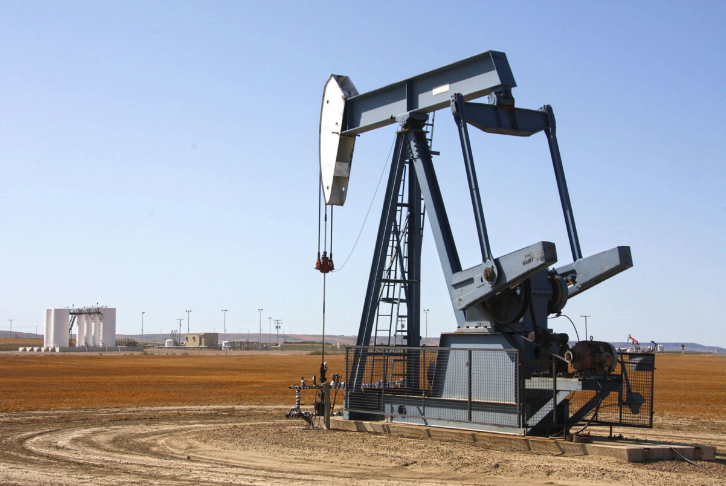
The 2026 Iran conflict has severely disrupted oil flows, especially through the Strait of Hormuz, prompting the U.S. to make significant changes to its energy policy. The immediate supply shock from losing so much of the world’s oil supply and the longer-term strategic vulnerabilities emerging from the situation couldn’t be more concerning. The shift in U.S. energy policy is occurring primarily in the space of oil. Immediate diversification efforts are being made to ensure that the U.S. won’t be caught off-guard again by relying too much on the Middle East for its oil. The U.S. has embarked on a dramatic expansion of domestic oil supply, from tight oil formations like the Bakken and Eagle Ford, but also from conventional onshore and offshore resources. In addition to using their own domestic production and tapping into their own significant oil reserves, U.S. policymakers are shoring up alliances and partnerships with non-Gulf oil producers. Policymakers are also assiduously cultivating partnerships with friendly nations for alternative shipping routes. Gulf spare capacity has been the world’s traditional shock absorber in terms of oil supply; when there’s a big blow up somewhere and oil supplies are curtailed, the Gulf states have historically come to the rescue, or “rescued the world’s oil markets.” In this current situation of Iran’s blockade of Hormuz, however, even the threat of the blockade has been enough to defer the rescue that might have been mounted by Gulf-producing nations. U.S. policymakers are not just trying to keep the oil supply lines that go from the Gulf to their friendly nations; they’re also putting a lot of energy and boldness into signaling alternative oil supply lines that contribute to the oil markets’ “spare” capacity.
At its core, the current 2026 Iran war has acted as a trigger for both the immediate market responses and the long-term policy shifts. It is able to exemplify the ways in which geopolitical conflicts can not only disrupt the economy but also recalibrate the kind of energy pathways that the United States and the rest of the world will likely use in the coming decades.
Sources:
https://arabcenterdc.org/resource/the-iran-war-and-the-end-of-the-us-gulf-oil-for-security-deal/
https://en.wikipedia.org/wiki/Economic_impact_of_the_2026_Iran_war
https://www.csis.org/analysis/who-winning-iran-war
https://www.congress.gov/crs-product/R45281.
https://pixabay.com/photos/oil-financial-support-sasketchewan-1044575/